WWJD stands for “What would Jesus do?”. The question goes back to the novel In His Steps by the American pastor Charles M. Sheldon, published in 1896. As an abbreviation on woven bracelets, it started in 1989 in a youth group in Holland, Michigan, and spread worldwide during the 1990s.
Today WWJD is often quoted with a wink rather than asked in earnest. Yet its origins are older and its demands greater than the four letters suggest. At Good-Natured we spend a lot of time with designs that make faith visible, for example in our Jesus Shirts. So here we explain where WWJD comes from, what the question means and what critics say about it.
• Meaning: WWJD = “What would Jesus do?”.
• Origin: Charles M. Sheldon’s novel In His Steps (1896), subtitled “What Would Jesus Do?”.
• Bracelets: Started in 1989 by youth leader Janie Tinklenberg in Holland, Michigan, and spread worldwide in the 1990s.
• Bible connection: Not a verse word for word, but closely related to 1 Peter 2:21 and 1 John 2:6.
1. WWJD: the meaning of the four letters
The abbreviation is quickly explained: W for “What”, W for “would”, J for “Jesus”, D for “do”. More interesting is what the question does. It shifts the point of reference. Instead of asking what is allowed or what feels good, it asks about an example, and a concrete person rather than an abstract principle.
That is useful in everyday life, because most difficult decisions do not fail because we don’t know the rule. They fail because we don’t want to apply it in this particular situation. WWJD is therefore less a question of knowledge than a question of conscience.
2. Where does WWJD come from? Charles M. Sheldon and “In His Steps”
Charles M. Sheldon was the pastor of a Congregational church in Topeka, Kansas. A series of his sermons became the novel In His Steps, subtitled “What Would Jesus Do?”, which appeared in 1896, first as a serial. It is one of the best-known Christian novels of its time.
The plot is simple: a pastor challenges his congregation to ask themselves for one year, before every decision, what Jesus would do in their place. Those who take part run into conflicts with work, business and social expectations. That is exactly Sheldon’s point: the question is easy to ask and hard to live with.
The title of the book echoes a verse from the First Epistle of Peter:
“For even hereunto were ye called: because Christ also suffered for us, leaving us an example, that ye should follow his steps.” (1 Peter 2:21, KJV)
The idea was not new in 1896 either. As early as the 15th century, the devotional book The Imitation of Christ, attributed to Thomas à Kempis, placed this thought at its centre, and the London preacher Charles H. Spurgeon used the phrase “what would Jesus do” in a sermon in 1891. Sheldon did not invent the question, but he gave it a story that reached many people.
3. The bracelet wave of the 1990s
The question became an abbreviation almost a hundred years later. In 1989 Janie Tinklenberg, youth leader at Calvary Reformed Church in Holland, Michigan, was looking for a simple reminder for her teenagers. The result was woven bracelets with the four letters. By the mid-1990s they could be seen everywhere in the US; in 1997 the magazine Christianity Today reported an expected three million bracelets sold in that year alone.
Pendants, caps, mugs and shirts soon followed, later spin-offs such as “FROG”. A question of conscience became one of the best-known Christian motifs of all. Good-Natured does not have a WWJD design of its own. But the question behind it accompanies us in many of our designs.
4. What would Jesus do? Following Jesus in everyday life
Behind WWJD lies a thought the New Testament expresses in several places. Most clearly in the First Epistle of John:
“He that saith he abideth in him ought himself also so to walk, even as he walked.” (1 John 2:6, KJV)
“Walk” here means the whole of life, not a few pious moments. Anyone who takes the question seriously quickly ends up in very ordinary situations: the colleague who makes mistakes, the neighbour who needs help, the way we handle money and time. In the Gospels, Jesus meets people with compassion again and again, including those whom others had long written off.
A similar idea lies in Jesus’ words about the light of the world, which we explain in detail in our article on Matthew 5:16: faith should be recognisable by what someone does. Clothing can be a reminder of that, nothing more. The Love like Jesus Rib Top (28 €), for example, turns the WWJD question into an answer: love the way Jesus loved.
5. What critics say about the question
The criticism is justified and belongs here. The main objection: the question assumes we know what Jesus would do, and in situations that do not appear in the Gospels. The danger is that we end up with our own opinion, just dressed in greater authority.
The second objection: a question about discipleship turned into an accessory. A bracelet does not replace a decision, and a confession that costs nothing is not one.
Some people ask the question differently today: not “What would Jesus do?” but “What did Jesus do?”. The idea is to look into the Gospels rather than into our own imagination. It is less catchy, but much more solid.
6. WWJD today: between confession and reminder
As a motif, WWJD has arrived roughly where the Ichthys fish symbol stands: culturally familiar, readable outside the church and therefore a keyword that needs no explanation. That is exactly what makes it wearable and, at the same time, a little worn out. How it relates to other signs such as the cross or Alpha and Omega is shown in our overview of Christian symbols.
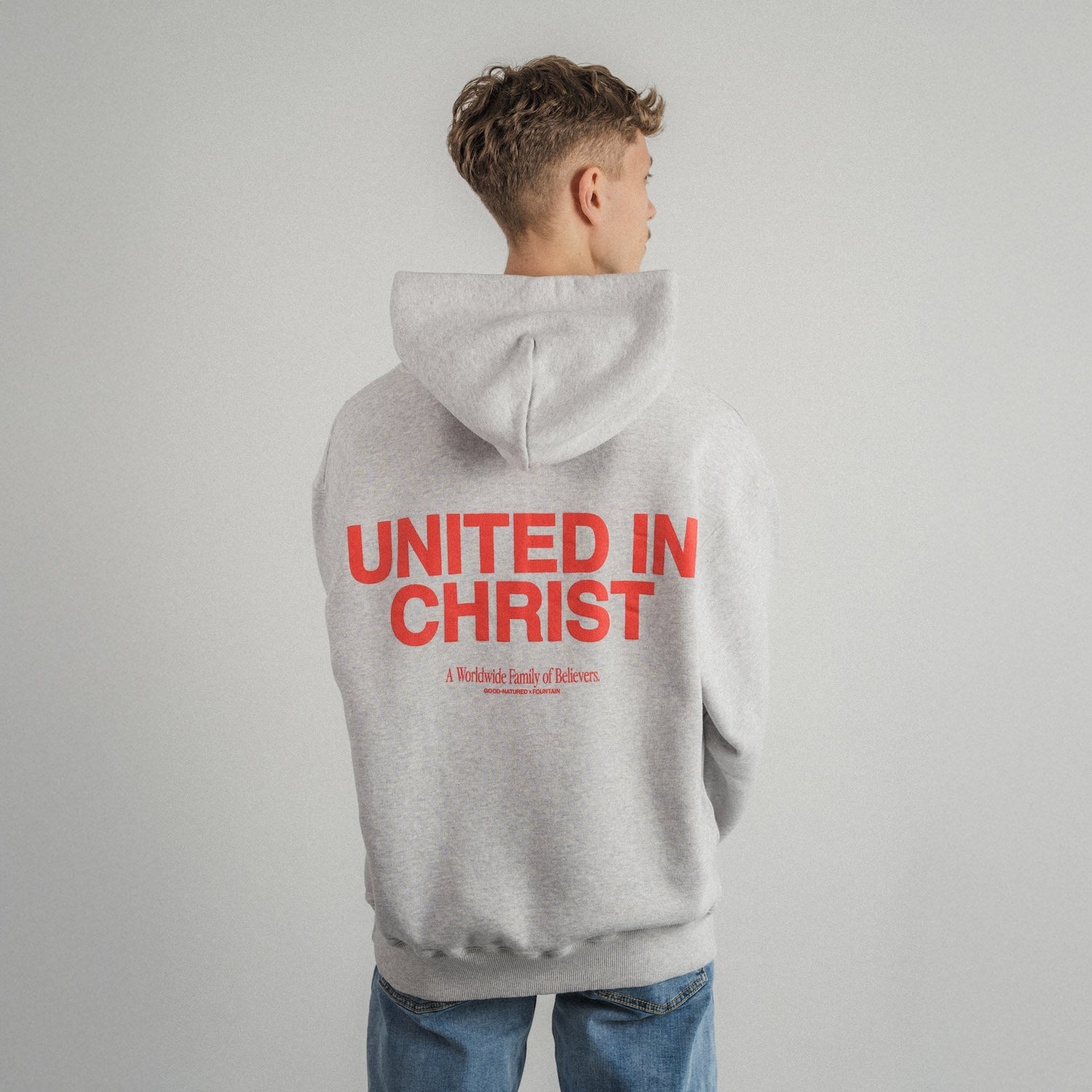
Whoever wears the letters mainly carries a question around with them. Taken seriously, that is more demanding than any answer printed on a chest. How much faith clothing may show at work, in everyday life or at church is discussed in our article How much faith can clothing show?. And what matters in a shirt with a Jesus design is covered in Jesus Shirts: 4 things to look out for.
A quiet version of the same question is the Fix Your Eyes on Jesus poster (ab 18 €): it hangs on the wall instead of the wrist and reminds you every day where to look before you decide. If you would rather wear it, The Greatest Love Story (32,30 €) is an oversized shirt that tells of Jesus’ love on the cross.
Conclusion
WWJD is older than the bracelet and more demanding than the abbreviation. The question comes from Charles M. Sheldon’s 1896 novel, became a worldwide motif in the 1990s and is most honest when left open rather than treated as a finished confession. At Good-Natured we design clothing that reminds us of questions like this. If you are looking for a design that puts Jesus at the centre, you will find it in our Jesus Shirts.
Frequently asked questions
Is “What would Jesus do?” literally in the Bible?
No, the question itself does not appear in the Bible. But it sums up a thought the New Testament expresses several times, for instance in 1 Peter 2:21 (Christ suffered for us, “leaving us an example”) and in 1 John 2:6. Phrasing it as a question only became widespread in the 19th century.
Is WWJD Protestant or Catholic?
WWJD is not tied to any denomination. Sheldon was the pastor of a Congregational church, and the bracelets started in a Reformed church in the US. Later they were worn by Christians from many different churches.
What does FROG mean?
FROG stands for “Fully Rely On God”. The motif appeared after the WWJD wave and was likewise spread on bracelets and pendants. It shifts the emphasis from our own actions to trust.
Can you wear WWJD if you are unsure about your faith?
Yes. The four letters ask a question; they are not a finished confession. For people who are exploring Jesus without having all the answers yet, that can be more honest than a slogan that claims certainty.

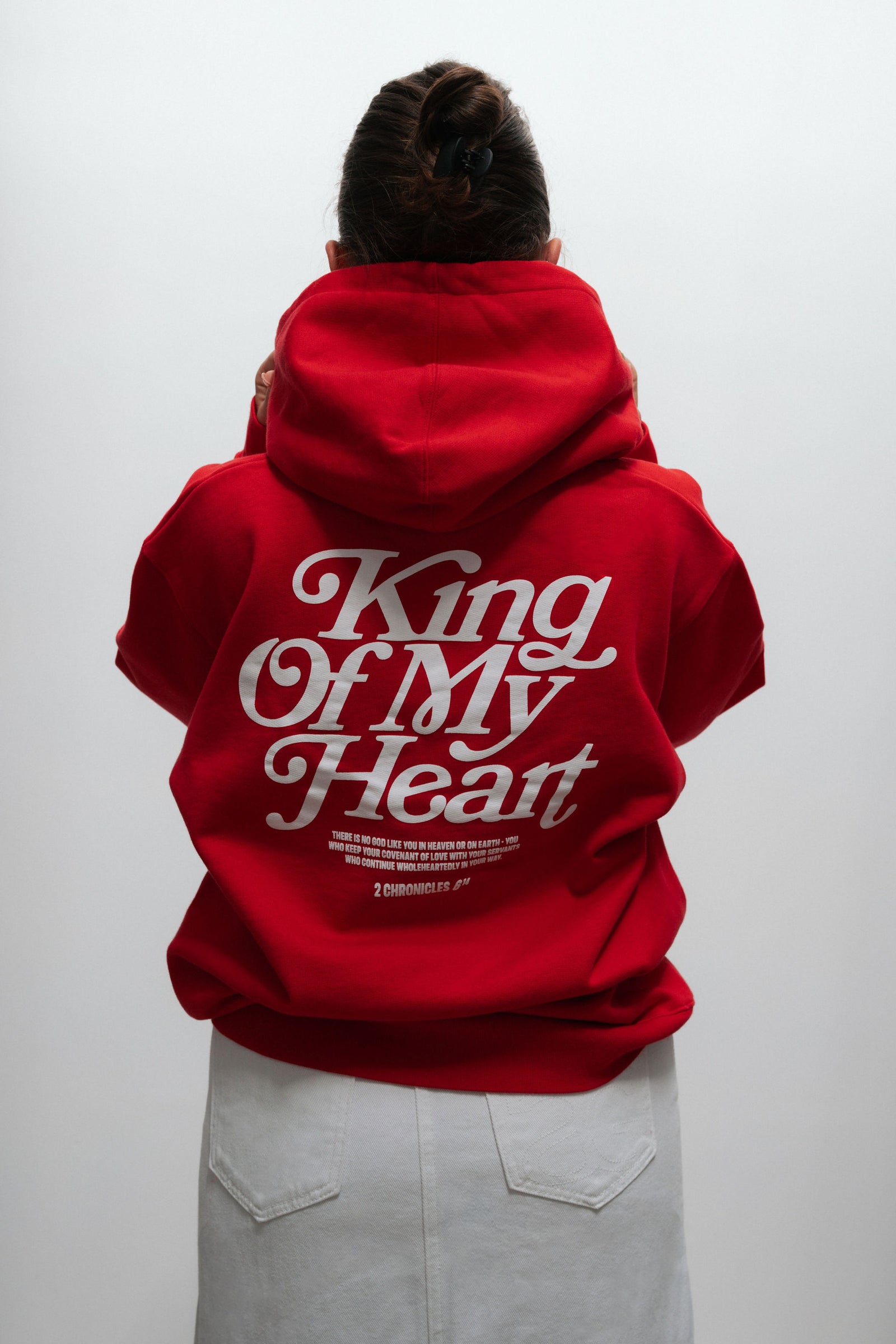
Clothing with verses and motifs that point to what matters in everyday life. Also with a Bible connection: the King Of My Heart Oversized T-Shirt (38 €).
View the collection ↗