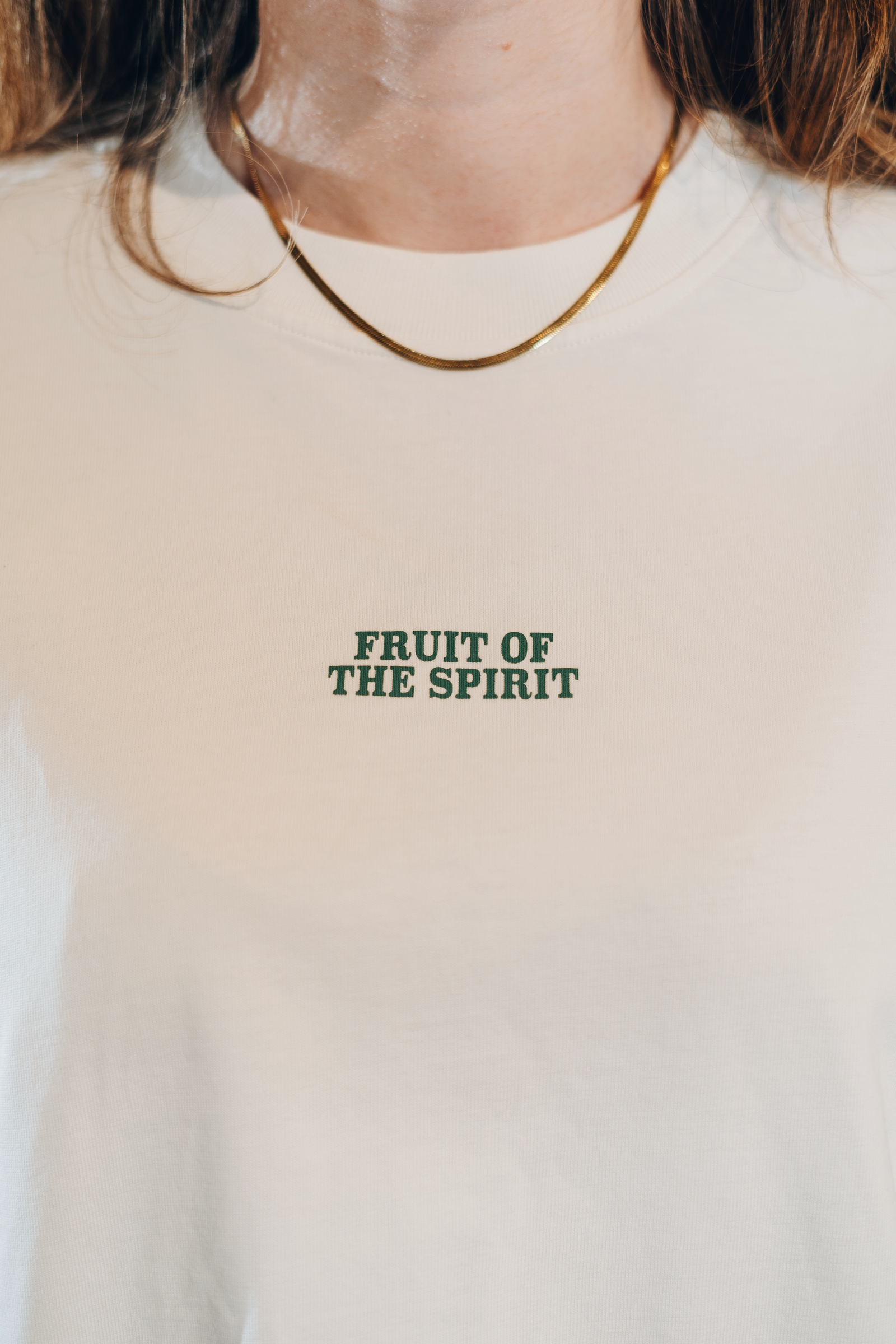
A well-made T-shirt lasts for several years with good care – even in daily rotation. A very light promotional shirt, on the other hand, is often worn out after one season. The difference comes down to two moments: the purchase (fabric, yarn, finishing) and everyday life afterwards (washing, drying, storing). At Good-Natured we think about both from the start, because a shirt that gets worn for a long time is the best argument for fair clothing.
A shirt rarely breaks, though. It just stops looking good: the collar stretches, white turns grey, the print cracks along the folds. At some point it ends up in the rag basket, and nobody could say exactly when the turning point was.
• Lifespan: a well-made shirt lasts several years with good care, a very light promotional shirt often just one season.
• Weak spot no. 1: the collar – it stretches out if the rib is thin or the shirt hangs by its collar.
• Biggest everyday lever: wash less often, 30 degrees, inside out, no tumble dryer, store folded.
• Key figure: how often a garment is worn – one of the most important factors in life-cycle assessments of clothing.
“A shirt rarely breaks. It stops looking good – and that is a process you can influence.”
Where does a T-shirt fail first?
The collar. The most common reason shirts get thrown out. It stretches if the rib is too thin – or if the shirt is hung up by the collar instead of folded.
The print. It cracks where the fabric gets creased. High spin speeds press exactly those folds into it.
Pilling. The little bobbles come from friction. Combed cotton with long fibres pills far less than coarse yarn – and a fabric shaver removes them in two minutes.
Colour. Dark shirts turn grey, white ones yellowish. The cause is usually washing too hot combined with heavy-duty detergent that contains optical brighteners.
What is already decided when you buy
A large part of a shirt’s lifespan is settled before it goes into the washing machine for the first time. Four things are worth a second look:
Fabric and yarn. A dense jersey made from combed cotton with long fibres stays smooth and keeps its shape longer than thin, loose fabric. Fabric weight is a good first indicator but no guarantee – what counts is the combination of weight, yarn and density.
Collar and seams. A rib collar that springs back after stretching, and neatly finished seams at shoulder and hem, survive far more washes.
The finishing. Embroidery ages differently from print: it doesn’t crack, it stays as long as the thread holds. How the finishing techniques differ in durability and look is shown in the comparison of embroidery and print.
The cut. A shirt that fits well gets worn more often. Which cut suits you is explained in the guide Oversized, boxy or relaxed.

At Good-Natured many of our shirts and hoodies are made in Portugal – close enough for us to visit regularly and refine samples with the production team over several rounds. You’ll find all pieces from Portugal in the collection Made in Portugal. One example of a piece built to last for years: the King Of My Heart Oversized Hoodie at 400 g/m², made from GOTS-certified organic cotton (80%) and recycled polyester (20%), with embroidery on the chest, for 68 €.
What extends the lifespan in everyday life
The most effective measures cost nothing:
Wash less often. A shirt that was worn for one day and doesn’t smell doesn’t need the machine. Airing it overnight is often enough.
30 degrees, low spin, inside out. Three settings, one effect: less friction on the print and the surface.
No fabric softener, no tumble dryer. One leaves a film on the fibres, the other combines heat with friction.
Store folded. It saves you the stretched collar – the most common cause of death of all.
The detailed rules for prints and embroidery are in the article How to wash shirts properly.
The number that really matters
Life-cycle assessments of clothing keep coming back to the same figure: how often a garment is worn before it is thrown away. It shapes a garment’s footprint strongly – often more than you’d think at the till.
In practice this means: a good shirt that is worn for years makes more sense than one that loses its shape after a season. And care isn’t a side issue – it’s one of the biggest levers you have in your own hands.
The same logic applies to price. A shirt that costs twice as much but is worn three times as often is cheaper per wear. Where the money goes with us is shown on every product page under “What makes up the price?”. For the Creation Knitwear Half-Zip, for example, €26.76 of €57.14 net goes into fair production – almost half.
A dense shirt made from combed cotton that is cared for lasts several years in regular rotation. A very light promotional shirt is often done after one season. The price difference is rarely threefold – the difference in durability often is.
When a shirt gets tired: what then?
Before a shirt is sorted out, take an honest look. A loose hem, a small hole at a seam or a loose thread on the embroidery are small repairs that take a few minutes with needle and thread. Pilling disappears with a fabric shaver.
If a shirt no longer looks good enough to go out in, it often remains a good sleep or sports shirt for a long time. Only when that is over does it belong in the textile collection – or it becomes useful one last time as a cleaning rag.
Conclusion
A shirt’s lifespan is decided twice: when you buy, by fabric, yarn and finishing, and every day afterwards, by washing and storing. Together they make the difference between one season and many years. At Good-Natured we design our pieces to be worn often – and we’re open about what goes into them.
Frequently asked questions
Does a cotton shirt shrink in the first wash?
Slight shrinkage is normal for cotton, especially at high temperatures and in the tumble dryer. Washing at 30 degrees and air-drying keeps it small. That’s why it’s worth checking the size chart rather than just going by your usual size.
Does a heavy shirt automatically last longer?
Not automatically. A high fabric weight helps, but a dense, well-made mid-weight fabric can outlast a heavy, loosely knitted one. Also look at the collar, the seams and the type of finishing.
How should I store shirts I won’t wear for a season?
Clean, completely dry and folded, ideally in a fabric or cardboard box rather than plastic. That way the cotton can breathe, and you avoid mildew spots or permanent creases.
Can a cracked print be repaired?
Fine cracks in a print can’t really be undone. Ironing inside out with a cloth in between sometimes smooths the print a little, but mostly just delays the next crack. Better not to let it get that far: wash inside out, low spin, no tumble dryer.

Most of our Christian clothing is made in Europe, many pieces in Portugal – for example the Rejoice Oversized Hoodie with 3D print and patch for 68 €.
View the collection ↗