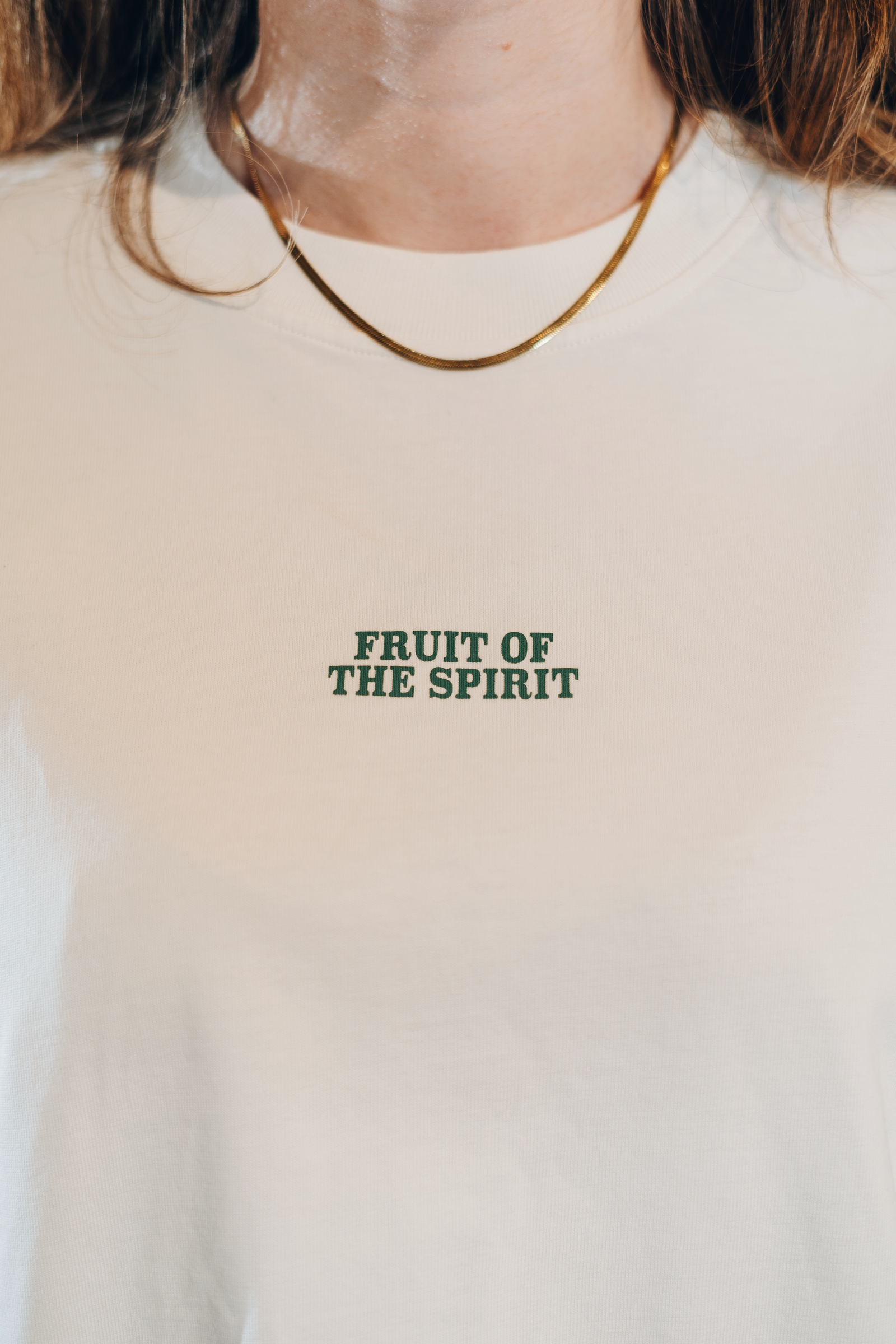
If you want to wash a shirt with a print, turn it inside out and wash it at 30 °C with a colour detergent, no fabric softener and a spin of 800 to 1000 rpm. Then let it dry in the air rather than in the tumble dryer. A shirt rarely wears out quickly because it was badly made; it wears out because it is washed too hot, too often and with the wrong products.
That is the good news: this part is in your hands. At Good-Natured, many of our T-shirts and hoodies are made from GOTS-certified organic cotton, often with a print, embroidery or both. This guide is written for exactly these pieces. Change a few habits and a shirt will last a lot longer.
“The best shirt is the one you already own. And it lasts about as long as you let it.”
1. How do you wash a shirt with a print properly?
Turn it inside out. The most important and simplest step. In the drum, garments rub against each other; turning the print inwards protects the very surface that suffers first. The same goes for embroidery, whose stitches can otherwise catch on zips.
30 °C instead of 40 °C. Modern detergents work reliably at 30 °C. Higher temperatures loosen print inks faster and make cotton shrink more. Everyday clothing does not need 60 °C.
Spin less. 800 to 1000 rpm is enough. Anything above that presses creases into the printed area, which set while drying and make the print crack at the edges.
Don't overfill the drum. An overfull machine washes less well and causes more friction. A hand's width of space above the laundry is the rule of thumb.

2. What prints can't handle
Three things reliably damage a print, and two of them sit in almost every bathroom.
Fabric softener. It coats the fibres with a film and undermines the bond between ink and fabric. Good cotton doesn't need it; it gets softer the more you wear it. A shirt like the Fruity Boxy T-Shirt, made from 100 % GOTS-certified organic cotton, for 38 €, does perfectly well without it.
Bleach. It is also found in many all-purpose detergents, often together with optical brighteners. For coloured and printed garments, use a colour detergent, not the white universal powder.
An iron directly on the design. The quickest way to ruin a print. Always iron inside out, and if you have to go over the printed area, place a cotton cloth in between.
Better not. Heat combined with mechanical movement is the toughest combination for printed cotton, and heavy fabrics visibly shrink in the dryer. A shirt on a hanger dries overnight and usually doesn't even need ironing afterwards.
3. Embroidery: different rules from prints
Embroidery usually lasts a very long time, because the design is made of thread rather than sitting on top of the fabric. Its problem is not temperature but snagging. So wash embroidered pieces away from zips, hooks and Velcro, and turn them inside out as well. With the King of my Heart Oversized Hoodie by Good-Natured (68 €), which is embroidered on the front and printed on the back, both rules apply at once. If you are wondering before you buy whether embroidery or print lasts longer: with the right care, both last for many years.
If individual thread ends come loose, don't pull them; trim them close instead. Pulling drags the whole stitch with it.
Knitwear is a special case. Knitted pieces such as the Creation Knitwear Half-Zip dry best lying flat on a towel. On a hanger, the weight of the wet knit stretches it out of shape.
4. How often should you wash a shirt?
A shirt that has been worn for one day and doesn't smell doesn't need to go in the wash. Airing it overnight is often enough. With hoodies and sweaters the difference is even bigger: they are worn over other clothes and barely touch the skin. Five to ten days of wear before washing is normal.
Small stains can be treated directly with a little water and ox-gall soap, without putting the whole garment through the machine.
5. If something does go wrong
Most minor damage can be fixed with small repairs that anyone can manage.
Pilling. The little bobbles are caused by friction, not poor quality. A fabric shaver removes them in two minutes and the piece looks as good as new. Pulling them off damages the fabric.
Stretched collar. Usually the result of hanging the shirt by its collar. It's better to store it folded or hang it over the bar of a hanger.
Small hole. Closed with needle and thread in five minutes, as long as it is small. If you wait, it gets bigger.
Conclusion
Inside out, 30 °C, a gentle spin, no fabric softener, no tumble dryer: that's all it takes to keep a shirt with a print looking good for a long time. Stick to it and a shirt made from good organic cotton will last far longer than the two seasons many people expect. How long a T-shirt really lasts therefore depends a great deal on how you care for it. At Good-Natured, material and origin are listed on every product page, including our T-shirts. How to recognise good quality when you buy is explained in our article Jesus shirts: 4 things that matter when you buy.
Frequently asked questions
Does organic cotton shrink in the wash?
Cotton can shrink slightly during the first few washes, and that applies to organic cotton just as much as to conventional cotton. Most of it happens at high temperatures and in the tumble dryer. Washing at 30 °C and air-drying keeps it to a minimum.
How do I wash hoodies made from organic cotton and recycled polyester?
Just like pure cotton: inside out, 30 °C, no fabric softener. A laundry bag further reduces friction on the surface and with it the pilling that tends to occur more with blended fabrics.
What helps against yellow deodorant stains?
Rub them with ox-gall soap before washing, or soak the shirt for half an hour in lukewarm water with a little baking soda. Bleach is not the answer, because it attacks both colour and print.
How do you wash socks with a design?
Inside out at 30 to 40 °C, without fabric softener. Knitted-in or embroidered designs can't peel off like a print, but too much heat makes the fibres felt. Our socks are knitted in Saxony, Germany, and handle this kind of care well.

Christian clothing by Good-Natured: every product page lists the material, origin and how the price is made up.
View the collection ↗