According to a study commissioned by the UK government (2011), a cotton tote bag has to be used around 130 times before its climate impact beats that of a thin plastic carrier bag. If you factor in every environmental effect, including water, land use and fertiliser, the Danish Environmental Protection Agency (2018) arrives at several thousand uses. At Good-Natured we draw one simple conclusion from this: fewer bags, made so well that you happily take them with you every day for years.
"You have to use it a hundred times before it pays off" comes up in almost every conversation about tote bags. It is roughly true, but it is often used the wrong way, because the crucial follow-up question is missing: pays off in terms of what?
• Climate impact: around 130 uses (study for the UK government, 2011).
• All environmental categories: several thousand uses (Danish Environmental Protection Agency, 2018).
• Jute or cotton: Most so-called jute bags are actually cotton bags. Real jute is coarser and stiffer and does not cope well with the washing machine.
• Durability: What matters is fabric weight, handles stitched all the way down, reinforced seams and a sturdy bottom.
• Rule of thumb: Two good bags in daily use beat twelve thin ones in the hallway.

How often do you need to use a jute bag? Why the numbers vary so widely
Life cycle assessments do not compare "the environment" as a whole, but individual, clearly defined impacts. Depending on which one you look at, the tote bag looks completely different.
If you only count climate impact, meaning greenhouse gases per bag, the number of uses needed is in the low hundreds. The 2011 UK study puts it at around 130. A bag that goes shopping with you two or three times a week gets there in a little over a year.
If you also count water use, land use, fertiliser run-off and acidification, the number rises sharply, because growing cotton needs a lot of land and water in exactly these categories. In this overall assessment, the Danish Environmental Protection Agency arrived at several thousand uses in 2018.
Both calculations are correct. They simply answer different questions. Anyone who quotes a single number without naming the category is only giving half the answer.
"The honest answer is not 'a hundred' or 'a thousand'. It is: first tell me which environmental impact you mean."
Jute or cotton: what is the difference?
In everyday German almost every fabric bag is called a "Jutebeutel", a jute bag. Most of them, however, are made of cotton. The difference is easy to feel:
Jute is a bast fibre from the stem of the jute plant. The fabric is coarse, stiff and barely stretches, smells faintly of hay and has a natural brown colour. Jute is very tear-resistant but does not like the washing machine: it shrinks, hardens and loses its shape. Real jute bags are usually just wiped clean with a damp cloth.
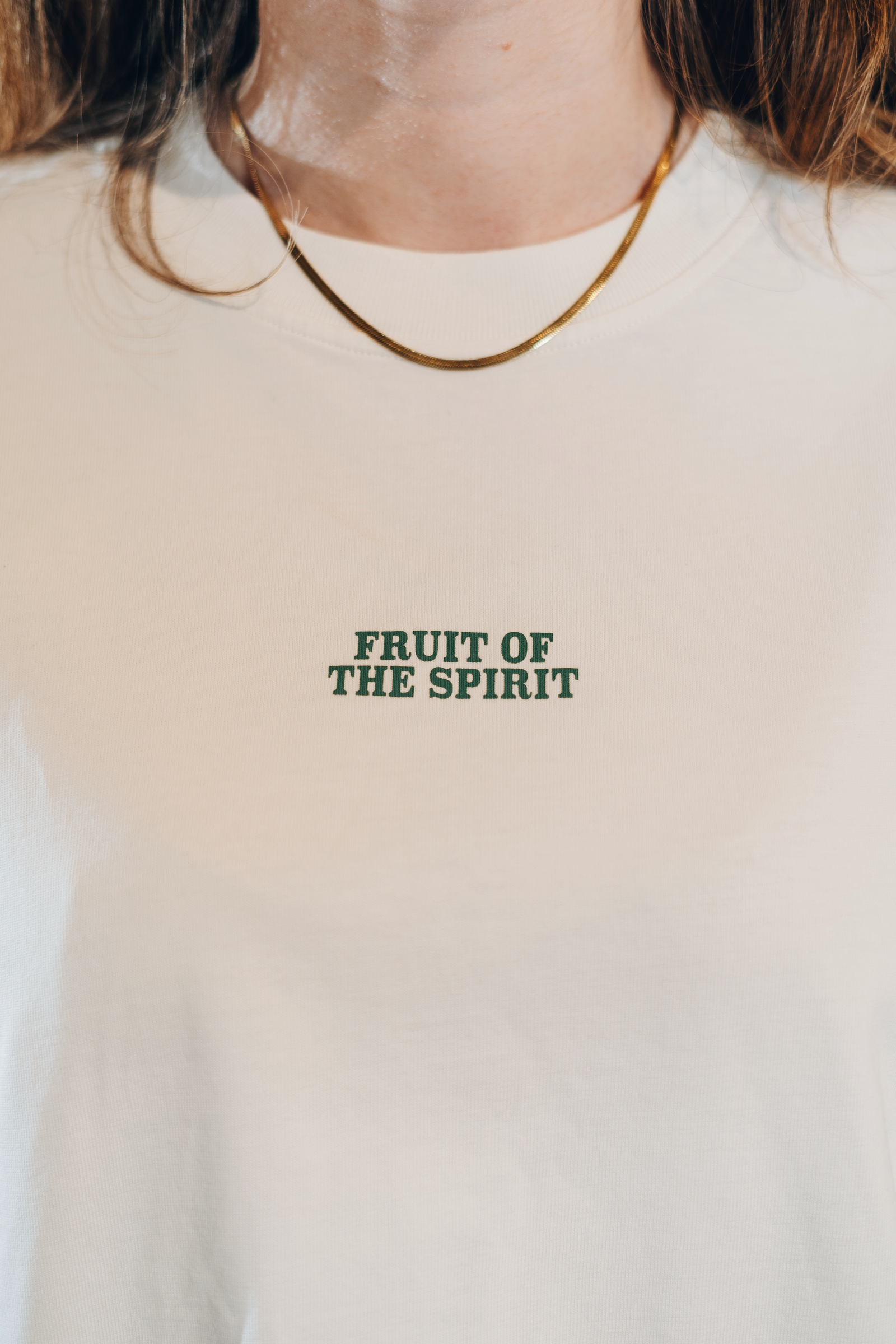
Cotton is softer, can be printed or embroidered in any colour and can go in the machine. For a bag that carries bread, fruit and gym clothes every day, that is the decisive advantage. That is why we at Good-Natured use cotton, for example for our Fruit of the Spirit Mesh Bag made from 100% organic cotton.
What this means in practice
Every one of these calculations leads to the same unromantic rule, and it is the real point of this article: The footprint a tote bag starts out with is only paid off through use, never through buying it.
That names the problem in many households. There are not too few tote bags, there are too many: the one from the trade fair, the one from the bookshop, the one from the sports club, three from the supermarket. Each of them came with its own footprint, and together they spread the uses across twelve bags instead of two.
So the bag with the best footprint is always the one you already own. The second best is one that is so well made, and so well loved, that it makes the other eleven unnecessary.
How do you recognise a good tote bag?
Fabric weight, handles, seams and bottom. These four features decide whether a bag lasts two years or ten, and you can check all of them before you buy.
Fabric weight. Very thin promotional bags are often 100 to 140 g/m² and lose their shape after just a few shopping trips. The higher the weight, the more stable the bag. Sturdy everyday bags start at around 160 g/m², heavy canvas qualities at 300 g/m² and more.
The handles. The most important part of all. Straps that are stitched down the full height of the bag spread the load across the whole surface. Handles sewn on only at the top hang from two seams, and that is exactly where most bags tear.
The seams at the ends of the handles. A reinforced box stitch with a cross inside is a good sign. A single straight seam is not.
The bottom. Double-stitched or with a gusset, otherwise the heaviest part of the bag rubs unprotected on the pavement.
• Hold it up to the light: If you can clearly see through the weave, the fabric is too thin.
• Pull on the handle: If the seam visibly gives, it will do the same on the first big grocery run.
• Turn the bottom over: A single seam straight across the bottom is the most common weak spot.

The Mesh Bag made from 100% organic cotton with an open mesh and a sturdy cotton panel, embroidered with "Carry good Fruit". 61 cm handles for shoulder or hand, carries up to 6 kg. For 19 €.
View the Mesh Bag ↗The real enemy is not the bag but forgetting it
Most people own enough tote bags. They just do not have one with them, and buy the next one at the checkout. Three habits solve this more reliably than any good intention.
One lives permanently in your bag. Rolled up in your backpack or handbag, and back in there straight after shopping, not on the shelf first.
One stays in the car, but up front. In the boot it is no use, because you only see it once the plastic bags are already packed.
The empty bag goes to the front door, not into the cupboard. This is the only change on this list you only have to make once.
And to be honest: the bag you take along most reliably is the one you enjoy carrying. A design that means something to you helps more than any reminder on your phone.

Can you wash a jute bag?
Cotton bags can and should be washed, especially if they carry fruit, vegetables or meat packaging. 30 to 40 degrees is enough, turn printed bags inside out, and there is no need for the dryer. How to protect prints and embroidery while washing is explained in detail in our guide How to wash shirts properly. The same applies to bags. Real jute, on the other hand, is best just wiped with a damp cloth or hand-washed cold and dried flat.
A handle seam coming undone is the most common reason a bag gets thrown away, and at the same time one of the easiest repairs: with a needle and strong thread it is closed in ten minutes. Small repairs like this add years to a bag's life.
When it is truly worn out
A bag made of pure cotton has three more lives after shopping: as gift wrapping, as a shoe bag in your suitcase and, cut open, as a cleaning cloth. As gift wrapping that is part of the gift itself, a beautiful bag makes a real impression. That is why it is worth checking the label: a high synthetic content makes reuse harder.
Bags by Good-Natured: what they are made for
At Good-Natured we place great importance on producing in Europe. The Alpha & Omega Beach Bag is made in Portugal, like a large part of our collection. We explain why we produce there in Why a large part of our clothing is made in Portugal. All our suppliers are members of the Fair Wear Foundation.
Our bags are not giveaways but everyday companions with a message: the Mesh Bag for the market and the weekly shop, the Beach Bag with zip for the pool, the weekend and uni. Both also make good gifts. You will find more ideas in this price range in Christian gifts that actually get used.
For churches, camps and associations we also make tote bags with your own design, for example from 160 g/m² organic cotton or as a heavier 300 g/m² bag. Everything about quantities, prices and process is on our B2B page.
Conclusion
The question of how many uses it takes cannot be answered with a single number: around 130 for the climate, several thousand across all environmental categories. What is clear is this: two sturdy, well-made bags in daily use beat twelve thin ones in the hallway, in every one of these calculations.
That is why we at Good-Natured design bags people enjoy carrying, and we are open about what goes into their price. Fair wages and good materials have their value, and a bag that comes along for ten years ends up being the cheapest one.
Frequently asked questions
How much can the Mesh Bag carry, and is it good for fruit and vegetables?
The Fruit of the Spirit Mesh Bag carries up to 6 kg. Thanks to the open mesh you can see what is inside, and fruit and vegetables stay ventilated. The sturdy cotton panel makes sure smaller items do not slip through.
Can our church order tote bags with our own design?
Yes, from 25 pieces, freely combinable with shirts or hoodies. A tote bag made from 160 g/m² organic cotton with two single-colour prints costs €7.50 net per piece from 50 pieces and €6.50 from 100 pieces, plus VAT and shipping. The heavy 300 g/m² bag (80% recycled cotton, 20% recycled polyester) is €9.50 net from 50 pieces. Send your enquiry to b2b@good-natured.com.
Is a bag made from organic cotton better than one made from conventional cotton?
Organic cotton is grown without synthetic chemical pesticides and without genetic engineering. In life cycle assessments it still does not come out ahead in every category, because the yield per hectare is often lower. For the overall footprint, what matters most is how long a bag is actually used.
Can a tote bag go in the dryer or be ironed?
The dryer is not necessary and tends to make cotton shrink. Ironing is fine, but printed bags should be ironed inside out and not directly over the print. Embroidery is best ironed from the back on a towel.

For shopping, for uni or as gift wrapping: our bags with designs from our collections, such as the Mesh Bag and the Beach Bag.
View the bags ↗