Wrapping gifts sustainably mainly means choosing a cover that lives on after unwrapping. The six simplest alternatives to wrapping paper are a tote bag, a cloth in furoshiki style, paper from around the house, ribbon instead of tape, a good card, and wrapping paper used a second time. At Good-Natured we think about packaging in a similar way: we ship our orders without plastic, in biodegradable mailing bags and with paper inserts.
Conventional wrapping paper is bought, folded, taped, briefly admired – and torn apart in seconds. Much of it is coated, laminated with film or printed with metallic inks, and then it doesn’t belong in the paper recycling but in general waste. That doesn’t mean handing over gifts unwrapped. It just means the wrapping itself can be something that stays.
• Best solution: a tote bag or a cloth – the wrapping becomes part of the gift.
• Without buying anything: newspaper, maps, brown paper from parcels, jars and boxes.
• Small lever: ribbon instead of tape – so paper can be reused several times.
• Paper test: if a piece stays scrunched up after you crumple it, it’s usually pure paper.
“The best wrapping is the kind that doesn’t end up in the bin after unwrapping, but in use.”

1. The bag as wrapping
The simplest solution: the gift goes into a tote bag, tied at the top with a ribbon. No tape, no paper, no waste – and the bag becomes part of the gift instead of something to throw away.
It works especially well for things that are hard to wrap: books with uneven edges, socks, coffee, anything round. If you like, add a card announcing what’s inside. How a bag of coffee becomes a real present shows exactly this principle.
2. How does furoshiki work?
The Japanese technique needs nothing more than a square cloth and two knots. A tea towel, a scarf or a fabric remnant will do. The cloth is laid diagonally around the gift, two opposite corners are knotted, and the other two on top.
It looks more complicated than it is, takes less than a minute after the second try – and if you use a nice cloth, you’re giving two gifts in one.
• Newspaper with string – especially the business pages with their tables.
• Old maps and calendar pages – large and sturdier than wrapping paper.
• Brown paper from parcels – smooth it out and reuse it.
• Jam jars and shoe boxes – for small items and anything fragile.
None of it has to be bought, and all of it looks better than glittery foil.

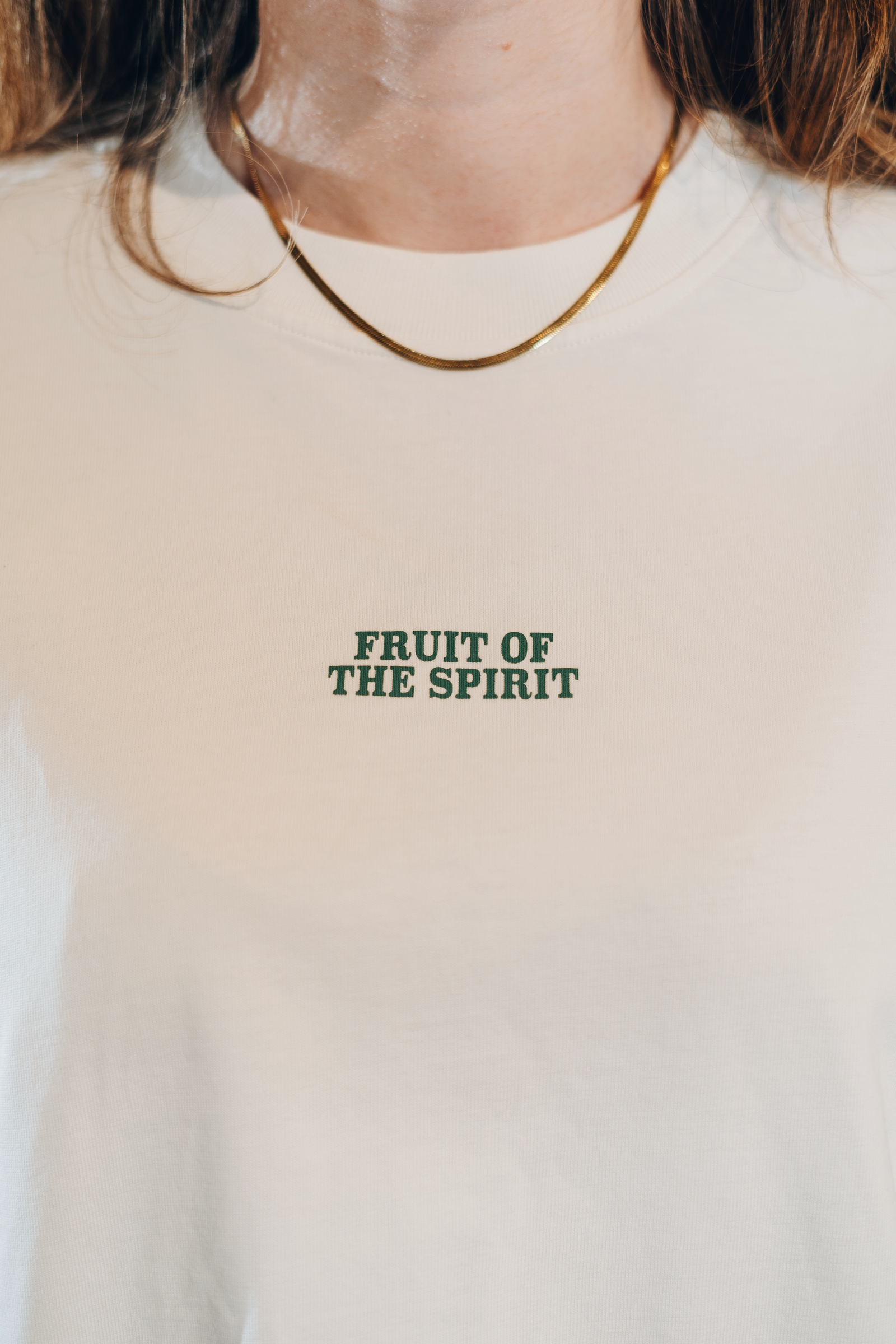
The Fruit of the Spirit Mesh Bag made from 100% organic cotton, embroidered with “Carry good Fruit”, holds up to 6 kg – enough for a book, socks and a bag of coffee. After unwrapping, it stays an everyday bag. For 19 €.
View the bag ↗3. Ribbon instead of tape
Tape is the reason wrapping paper can usually only be used once. If you use string, parcel twine or a fabric ribbon instead, paper can be reused several times – and the ribbon goes into a drawer and comes out again next time.
A drawer full of saved ribbons sounds like something from grandma’s house, and it’s the most practical habit on this list.
4. The card matters more than the cover
What people remember is rarely the paper. It’s the three sentences that came with it. Simple wrapping with a handwritten card almost always feels more personal than elaborate paper with a pre-printed tag.
If you’re lost for words, a four-sentence framework that doesn’t sound like a cliché helps. You’ll find matching designs among our postcards, which are printed in Germany.

An invitation to coffee together, placed on top: the Coffee Date postcard, printed in Germany, for 2 €.
View the card ↗5. Which wrapping paper is sustainable?
If it has to be paper: uncoated, unlaminated paper, ideally made from recycled fibres and without metallic or glitter print.
A simple test helps when in doubt: scrunch a piece up. If it stays scrunched, it’s usually pure paper and belongs in the paper recycling. If it springs back open or shines at the creases, there’s often plastic in it – then it belongs in general waste.
6. Pass it on instead of throwing it away
Wrapping paper that was opened carefully can be smoothed out and used a second time. That isn’t stinginess, it’s the original way of treating a material that was once expensive. If you do it with humour – a box the paper goes into after presents are opened – it becomes a family tradition rather than a lecture.
What fits nicely into a bag
A bag as wrapping invites you to combine several small things. A proven mix: a pair of socks, such as the Alpha & Omega Socks for 12 €, knitted in Saxony, Germany, plus a bag of Living the Good Life from our Dresden roast, ab 12,50 €, and a card. More ideas in this range are collected in the article Christian gifts under 20 euros, and ideas for the holidays are in Christmas gifts with a Christian message.
Conclusion
Wrapping sustainably doesn’t mean wrapping plainly. Fabric, paper from a parcel, ribbon instead of tape and a good card look better than most of what’s on the shelf – and last longer than a few seconds. At Good-Natured we like to make a bag half the gift.
How a bag lives on in everyday life afterwards, and how often you should use it, is covered in the article How often do you need to use a tote bag?.
Frequently asked questions
How do I wrap a bottle or something round without paper?
With a cloth: lay the bottle diagonally on the cloth, roll it up and knot the two ends at the neck. For round things like candles or jars, place them in the middle, fold the four corners up and tie them into a handle.
What should I use if the gift is being posted?
A sturdy box, brown paper or crumpled newspaper as padding, and paper tape instead of plastic tape to close it. Wrap the bag or cloth around the gift inside – that way the nice wrapping stays protected in transit.
Is brown kraft paper automatically more sustainable?
Not automatically. What matters is whether it’s uncoated and made from recycled fibres. Uncoated kraft paper can go into the paper recycling; glossy coated paper can’t – the scrunch test shows it quickly.

A bag instead of wrapping paper – with designs from our collections, and still in use in everyday life afterwards.
View the bags ↗