Philippians 4:13 does not mean that Christians can achieve anything they set their minds to. Paul wrote the sentence from prison, and what he means is this: in every situation – in want as in plenty – he is carried by a strength that does not come from himself but from Christ. The verse is therefore less a motivational slogan for success than a comfort for the days when nothing works out. At Good-Natured, our Strong in Grace collection tells exactly this story: being strong through grace, not through your own performance.
• Wording (King James Version): “I can do all things through Christ which strengtheneth me.”
• Context: Paul is in custody and thanks the church in Philippi for their support (Philippians 4:10–20).
• Core message: contentment and endurance in every situation – not a guarantee of success.
• Fits: transitions and dry seasons – confirmation, graduation, new beginnings, illness.
“I can do all things through Christ which strengtheneth me.”
– Philippians 4:13 (King James Version)
What does Philippians 4:13 mean?
The verse sits at the end of a thank-you letter. The church in Philippi had sent Paul money and help while he was imprisoned. Paul thanks them – and in the same breath explains that he is not complaining out of need. In the verses before, he describes how he has learned to get by with little and to handle much, to be full and to be hungry. Only then does the famous sentence follow.
The “all things” in Philippians 4:13 therefore refers to exactly these circumstances: Paul can endure poverty and plenty, freedom and captivity, without his confidence depending on them. He explicitly describes the strength for this not as his own discipline but as a gift – Christ is the one who strengthens him.
Why the verse is often misunderstood
Philippians 4:13 is one of the most quoted Bible verses of all – on jerseys, in locker rooms, on Instagram. There it is usually read as a formula for victory: if you believe enough, you win the game, pass the exam, get the job. This reading has two problems.
It twists the context. Paul is not writing about victories but about enduring hardship. The verse was written from a prison cell, not from a winner's podium.
It leaves you disappointed when things don't work out. If you read the verse as a promise of success, every defeat has to be interpreted as a failure of faith. The opposite is meant: precisely when something fails, the promise still stands.
That does not mean the verse is out of place in sport or before an exam. It fits there well – as encouragement for the journey, not as a guarantee of the result.

What “strengthened by Christ” means in everyday life
Three situations in which Philippians 4:13 shows its real strength:
When money is tight. A month when the money doesn't stretch, a time without work, a move into the unknown. Paul describes exactly this situation – and that contentment can be learned there.
When things go well. Often overlooked: Paul also names abundance as a challenge. Whoever is successful needs the same strength to stay grounded and generous.
When you have to keep going. In a marathon, while caring for a relative, in the third semester of statistics. The verse doesn't promise an easy road, but one you don't walk alone.
A related promise can be found in Matthew 11:30, where Jesus speaks of an easy yoke and a light burden. Our Easy Yoke collection is based on it, for example the Easy Yoke Poster for 12 €.
Wearing – and gifting – Philippians 4:13
A verse that is quoted so often works best when it isn't loud. At Good-Natured we therefore translate the thought into a quiet message: “Strong in Grace”. The collection ranges from sportswear to everyday pieces, many of them made in Portugal:


As a gift, Philippians 4:13 suits transitions: confirmation, graduation, a first job, before surgery or after a breakup. A pair of socks or a shirt with the message becomes an everyday sign – and a card explains why you chose this particular verse. More ideas can be found in Confirmation gifts teenagers actually keep. If you are looking for more Bible verses about strength and courage, 2 Timothy 2:1 is a good place to start: there Paul encourages his co-worker to be strong in the grace that is in Christ.

The Strong Longsleeve for 48 €, made in Portugal: a quiet reminder of where strength comes from.
View the longsleeve ↗Conclusion
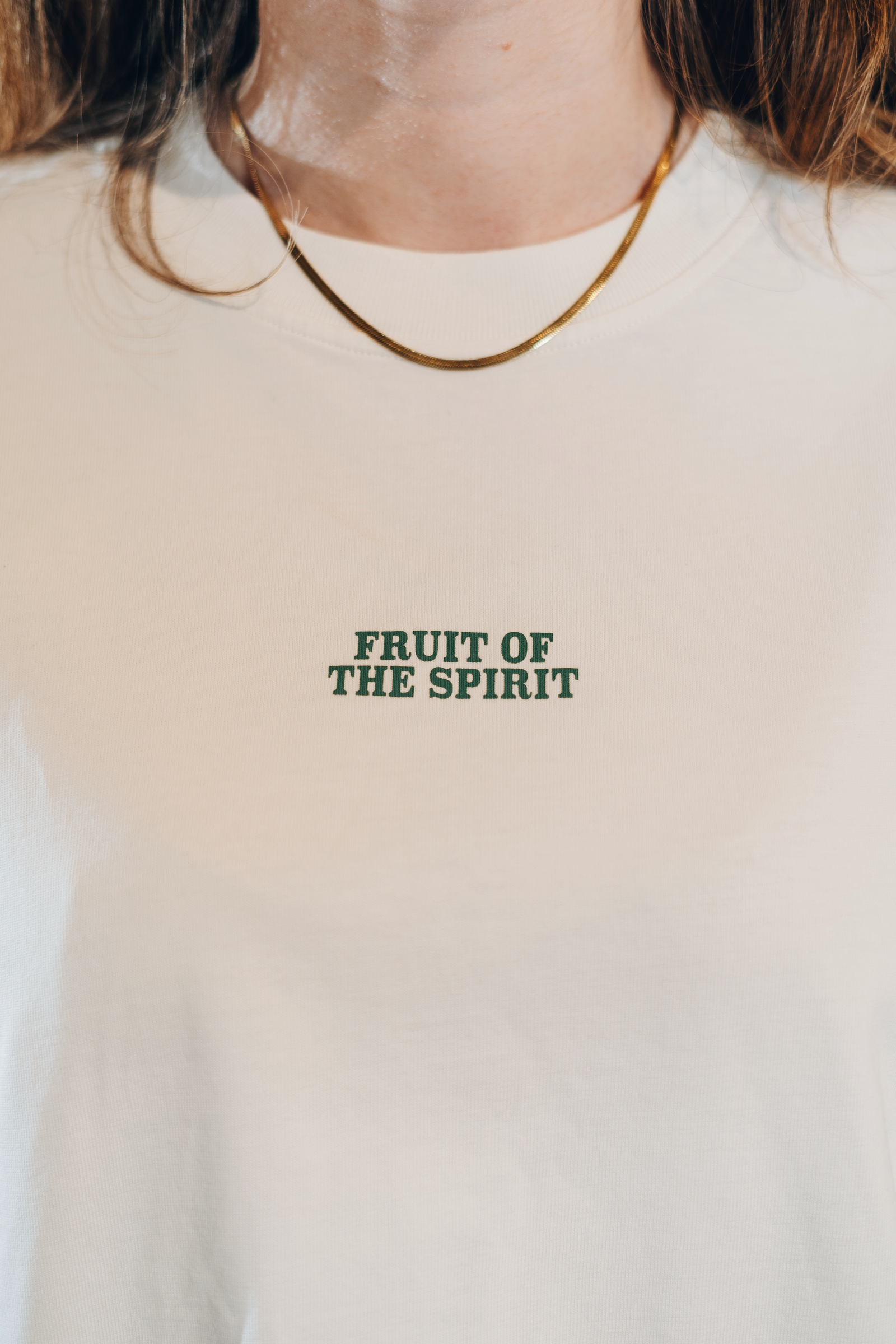
Philippians 4:13 is not a promise that everything will succeed, but the assurance that you are held in every situation – in want as in plenty. Read this way, the verse loses none of its power but gains honesty: it carries you through defeats as well. This is exactly the message behind the Strong in Grace collection by Good-Natured. How the qualities that faith produces can be lived out in everyday life is explained in our article on the Fruit of the Spirit.
Frequently asked questions
Who wrote Philippians 4:13 – and when?
The apostle Paul, probably between AD 55 and 62. Where he was imprisoned is debated; Rome, Ephesus and Caesarea are suggested. What is certain is that he wrote the letter as a prisoner (Philippians 1:13).
Does every translation mention “Christ” in the verse?
No. The King James Version and the German Luther Bible of 1912 name Christ explicitly; many modern translations leave the name out. The reason is differing Greek manuscripts – in both cases Christ is meant, as the context shows.
Is it okay to use Philippians 4:13 in sport?
Yes – as encouragement for training, perseverance and defeats. It only becomes difficult when the verse is read as a guarantee of victory. Paul didn't write it after a triumph, but in captivity.
Which verse fits if Philippians 4:13 is too familiar?
Closely related are Isaiah 40:31 (new strength for those who wait on the Lord), 2 Corinthians 12:9 (God's strength is made perfect in weakness) and 2 Timothy 2:1. All three connect strength with grace rather than achievement.

Sportswear and everyday pieces with a message that echoes Philippians 4:13: your strength doesn't come from yourself. For example the Strong in Grace Leggings for 65 €, made in Portugal.
View the collection ↗