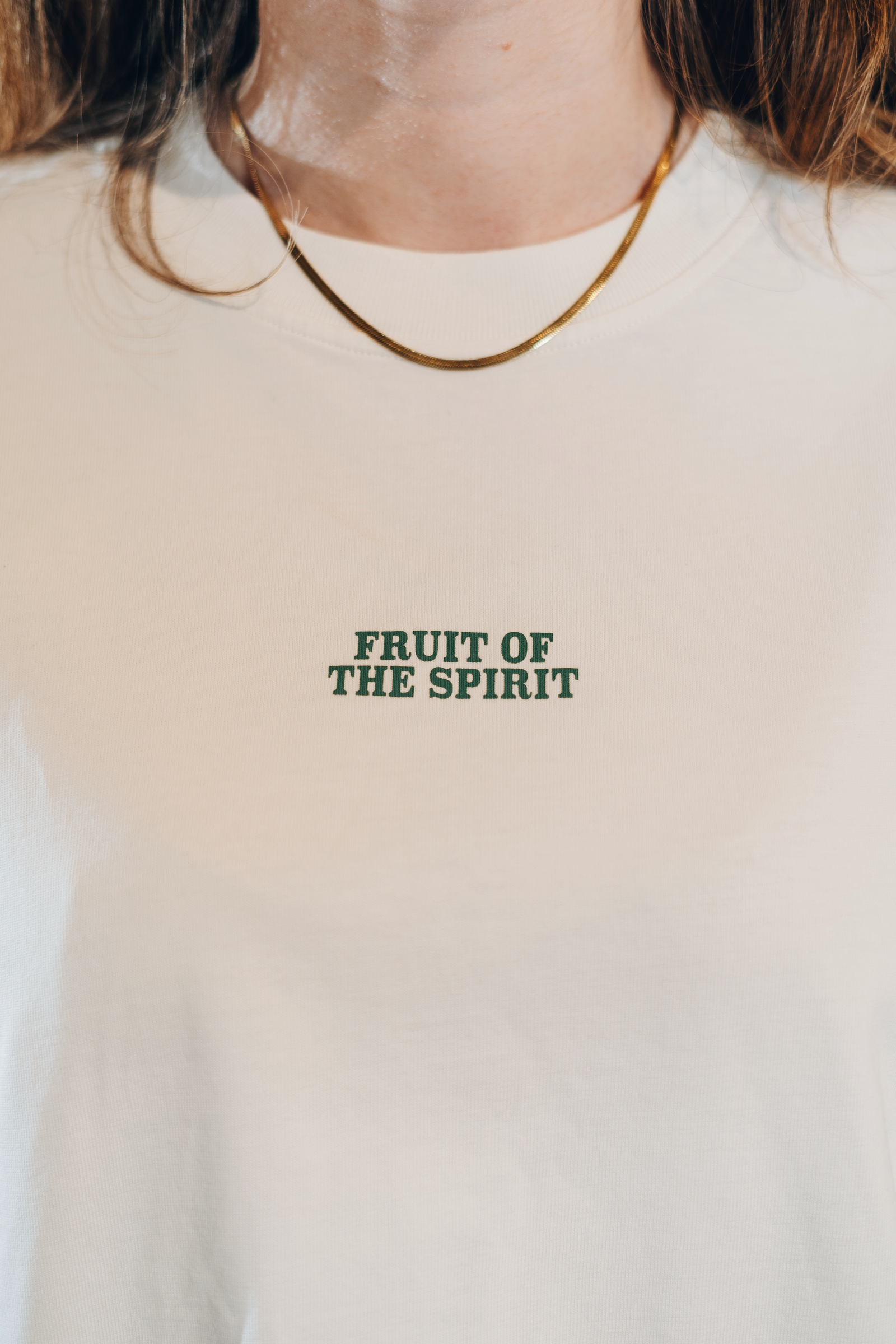
Nine concepts, one verse, two thousand years of impact: The fruit of the Spirit is one of the most quoted passages in the New Testament—and one of the most misunderstood. It is often read as a checklist, as if it were a distribution of tasks for one’s own behavior. The word in the verse itself contradicts this.
In the letter to the church in Galatia, Paul does not write of fruits in the plural, but of the fruit in the singular. Nine qualities, one fruit. This is no linguistic coincidence; it is the whole point.
“But the fruit of the Spirit is love, joy, peace, patience, kindness, goodness, faithfulness, gentleness, self-control.”
Galatians 5:22 (Luther 1912)
Why does Paul speak of fruit rather than performance?
You do not make fruit. It grows when the conditions are right—soil, light, time. This is exactly the image Paul chooses, and he chooses it in contrast to what he lists immediately before: behaviors that come from one’s own effort and drive.
The difference is practical, not theoretical. Someone who understands patience as a task will fail at it and feel guilty. Someone who understands it as fruit asks a different question: Why is nothing growing here? This is a question about conditions, not discipline.

What are the “nine fruits of the Spirit”?
Love, joy, peace, patience, kindness, goodness, faithfulness, gentleness, and self-control.
1. Love (Love)
The Greek word here is agape—not a feeling, but a commitment that chooses someone regardless of whether they deserve it. It is no coincidence that it comes first: the following eight concepts can all be read as its expressions.
2. Joy (Joy)
This does not mean a good mood. New Testament joy is astonishingly often associated with difficult circumstances—it does not depend on circumstances, but on something that exists independently of them. This makes it more stable than mood and harder to explain.
3. Peace (Peace)
The Hebrew background of shalom means more than the absence of conflict: a state in which something is complete and whole. Peace in this sense is not passive, but something that is created.
4. Patience (Patience)
The Greek term literally describes long breath—the ability not to strike back immediately. It is less about waiting than about enduring people who are difficult for you.
5. Kindness (Kindness)
The most everyday of the nine and therefore easy to underestimate. It is not shown in grand gestures, but in the tone used with people from whom you need nothing.
6. Goodness (Goodness)
While kindness describes an attitude, goodness means the actions that follow from it. It is kindness that costs something.
7. Faithfulness (Faithfulness)
Reliability over time. The quality that can only be judged after years and that may be most lacking in a culture of quick changes.
8. Gentleness (Gentleness)
The most misunderstood concept. Gentleness is not weakness, but controlled strength—the Greek word was also used for a tamed horse that retained its strength but could be guided.
9. Self-Control (Self-Control)
The ninth quality completes the circle: It is the ability not to follow every impulse—and at the same time the only one that feels like work.
The nine concepts can be broadly read in three groups: the first three describe what happens inside, the middle three describe relationships with others, and the last three describe how to deal with oneself. This is not intended as a ranking from most to least important—a fruit has no most important side.
What this means in everyday life
The text is brief enough to memorize, and broad enough to work on for a lifetime. Three questions that help without turning the list into self-optimization:
Which of the nine comes easiest to me? Usually the one you notice the least—and miss most in others.
Which one is missing right now? Not as an accusation, but as a clue. A lack of patience often has to do with sleep; a lack of peace with something left unresolved.
Where is nothing growing because the soil is missing? Fruit does not grow in a hurry. This is the most uncomfortable and useful insight from the image.


Galatians 5 in context
The verse does not stand alone. Paul writes to a church that is in the process of translating faith back into rules—and counters it with an image from agriculture. Anyone who reads the passage from Galatians 5:16 onward understands why the nine concepts are not a program, but a description of what happens when someone else works the soil.
Conclusion
The fruit of the Spirit is not a checklist to tick off or a personality test. It describes what a life looks like when something is allowed to grow. This takes the pressure off—and at the same time asks the more uncomfortable question of whether the conditions for it are even present.

Nine qualities, one collection: Shirts, posters, socks, and bags—materials and origins are listed for every product.
TO THE COLLECTION ↗