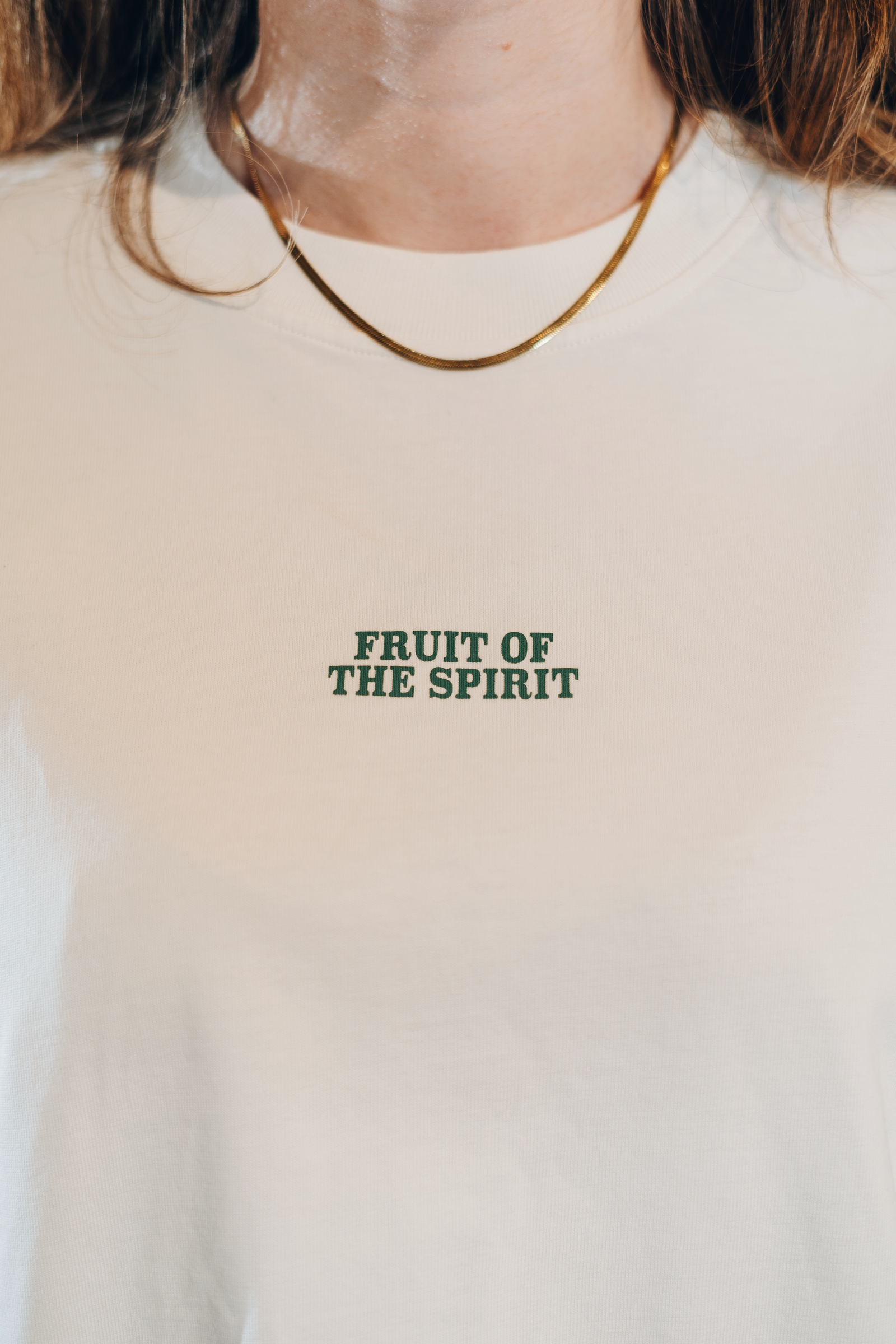
At Good-Natured a shirt is made in two phases: first we design everything digitally, then it goes into sampling – several rounds with our production team until fit, fabric, placement and colours are right. When you hold a finished shirt, you only see the final version. What you don’t see are the versions before it: the collar that was still too wide, the print that sat a little too low, the colour that looked different on screen than on fabric.
That’s exactly where it’s decided whether a piece turns out well. A design on the computer is an assumption; only the real garment shows whether it’s right. That’s why most of our product development isn’t designing but checking – on the sample, round after round.
“On screen, every piece looks finished. Whether it really is, you only find out when you hold it.”
How is a T-shirt design created?
For us, in two phases: first we design everything digitally, then it goes into sampling. We send all cuts and details to our production team, get samples back and say what works for us and what doesn’t. Over several such rounds, the final, refined product takes shape. Why a large share of our clothing is made in Portugal is explained in the article Why a large share of our clothing is made in Portugal.
The digital phase has one clear advantage: design, proportions, colours and placement can be tried out quickly and discarded just as quickly. What can’t be judged there is everything to do with the material – how the fabric drapes, how it feels, how a print or embroidery looks on it. For that you need the real garment.

What is a sample in fashion production?
A sample is a preliminary piece that the production team makes to the brand’s specifications before the series is produced. It’s used to check cut, material, workmanship and finishing on the real garment. If something isn’t right, the specification is corrected and a new sample is made.
The sample is where an idea becomes a product. Every correction made here affects a single piece. Every mistake overlooked here ends up in the whole series.
What do you look for in a sample?
Everything that can’t be shown on screen. Four points are typically at the centre – whether it’s a T-shirt, a hoodie or a blouse like our Grace Waffle Blouse.
Fit. Do the shoulders, chest width and length sit the way the pattern intends? Does an oversized piece fall loosely without looking shapeless? Fit can only be judged on the body, not on a table.
How the fabric feels. How does the material feel on the skin, how heavy is it, how does it behave after washing? Two fabrics with similar specifications can wear completely differently.
Print and embroidery placement. A few centimetres decide whether a design sits on the chest or on the stomach. Size often looks different on the garment than in the design, too – and whether embroidery or print works better only shows on the fabric.
Colours. A shade on screen isn’t the same as on fabric. Fabric colour, ink and thread have to work together on the real garment.

Single-colour embroidery on the chest, a print on the back, a slightly oversized cut: a piece where placement and fit have to work together.
View the hoodie ↗Why does it take several rounds of samples?
Because a correction rarely stays on its own. If the cut at the shoulder changes, the effect of the design may shift too. If the print gets smaller, it may need a different distance from the collar. Whether a change really works only shows in the next sample.
So each round means: write the feedback, send it to production, wait for the new sample, check again. That takes time – and it’s the reason a piece at Good-Natured doesn’t go straight from design to shop.


Is it worth the effort?
Yes, for a simple reason: a mistake spotted in the sample costs one more round. A mistake only spotted in the series is in every single piece. Several rounds aren’t a delay – they’re the cheapest point at which to change something.
By the way: samples from this process don’t end up in a drawer either, but in our Second Chance selection – together with damaged returns and production faults. Regular returns are refurbished and sold again as normal.
• The fit matches the size chart: a cut developed over several samples sits the way it’s described.
• The design sits where it belongs: not too low, not too big, at the right distance from the collar.
• The details feel considered: fabric, colour and finishing work together instead of just sitting side by side.
Conclusion
A good piece isn’t made on screen but in the back-and-forth between design and real fabric. Digitally you can design quickly; in sampling you see what holds up: fit, feel, placement and colours. Every round takes time, and every round makes the finished product a little more precise. What ends up in the Good-Natured shop is therefore not the first idea but the tested one – and that’s exactly what we mean by our name.
How to recognise well-made Christian clothing overall is summed up in the guide Christian clothing: 7 criteria for spotting good pieces.

You’ll find material, cut and finishing in each product’s description.
View the collection ↗